NAFNET: Creative Authorship Communities
Chaired by Gabi Boiangiu, Leeds Arts University
Most artists work individually and enjoy the solitude of their practice. However, creative people have always joined forces in producing larger scale works such as film makers, game designers, theatre productions. This has recently infiltrated more actively in fine art practices, by establishing fine art working collectives.
Assemble won the Turner Prize in 2015 and Array Collective won this in 2021. There is also a focus on working within the communities we exist within and the importance that art can have in changing the dynamics of cultural and sociopolitical relationships.
According to Becker (Art Worlds, 1980), ‘every work of art is the product of a specific art world comprising a range of participants and fabricators.’
Questions around authorship may sometimes be the reason why artists prefer not to venture in collaborative art production, perpetuating the idea of the ‘genius’ being the divine inspired artist that was born in Renaissance.
Collaboration can be considered to be a key driver of artistic creation and expression informed by the interaction we have with people around us: from friendly conversations, to a walk in the park, from watching something and sharing opinions or knowledge. Everything that surrounds us influences our understanding of our world and therefore the ideas that may run through our artwork.
In this session we will explore the idea of collaborative production and shared authorship in fine art and how such communities of creative collaborative practices can exist and influence each other. Looking at a variety of models that may be useful for future initiatives and reflecting on some case studies that have involved direct production of artwork as a collaborative initiative, the session will encourage an informal discussion and sharing ideas and practices.
NAFNET is a free member-focused forum for debate around important aspects of Fine Art education in the current climate. NAFNET takes place on Zoom and sessions are recorded and can be accessed by NAFAE members afterwards.
Booking will open soon, please check back for the link.
Speaker bio
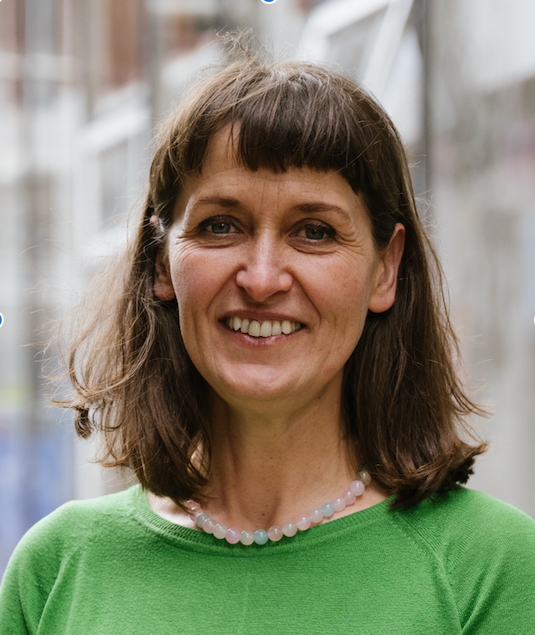
Gabi Boiangiu is an artist and a Senior Lecturer on the BA (Hons) Fine Art course at Leeds Arts University leading on the L4 delivery; prior to this role she acquired an extensive portfolio of teaching both in her role as an artist and as an academic. Gabi has worked in the UK, France and Russia in her previous educational roles and has enjoyed a broad level of educational experience.
Romanian/British artist Gabi Boiangiu studied at the Arts University, Bucharest before moving to the UK to do her Masters at Bradford School of Art and Design. Gabi has been teaching both in FE and HE since 2003 and graduated the PGCE at University of Huddersfield in 2007.
With a long-term interest in collaborative practices, Gabi has undertaken multiple extensive projects engaging both with other visual artists as well as the audience. Her practice continues to investigate the domestic in relation to class and gender issues. Recent collaborative work - Drawing Dialogue - investigates the notion of ownership in visual arts and its role to developing new creative ideas. Gabi’s practice is multidisciplinary and project based, exploring visual and material possibilities in given environments.