2026 Conference
Friday 24 April
Champness Hall, Rochdale
IT TAKES A VILLAGE TO RAISE AN ARTIST
Local, Trans-local, Global
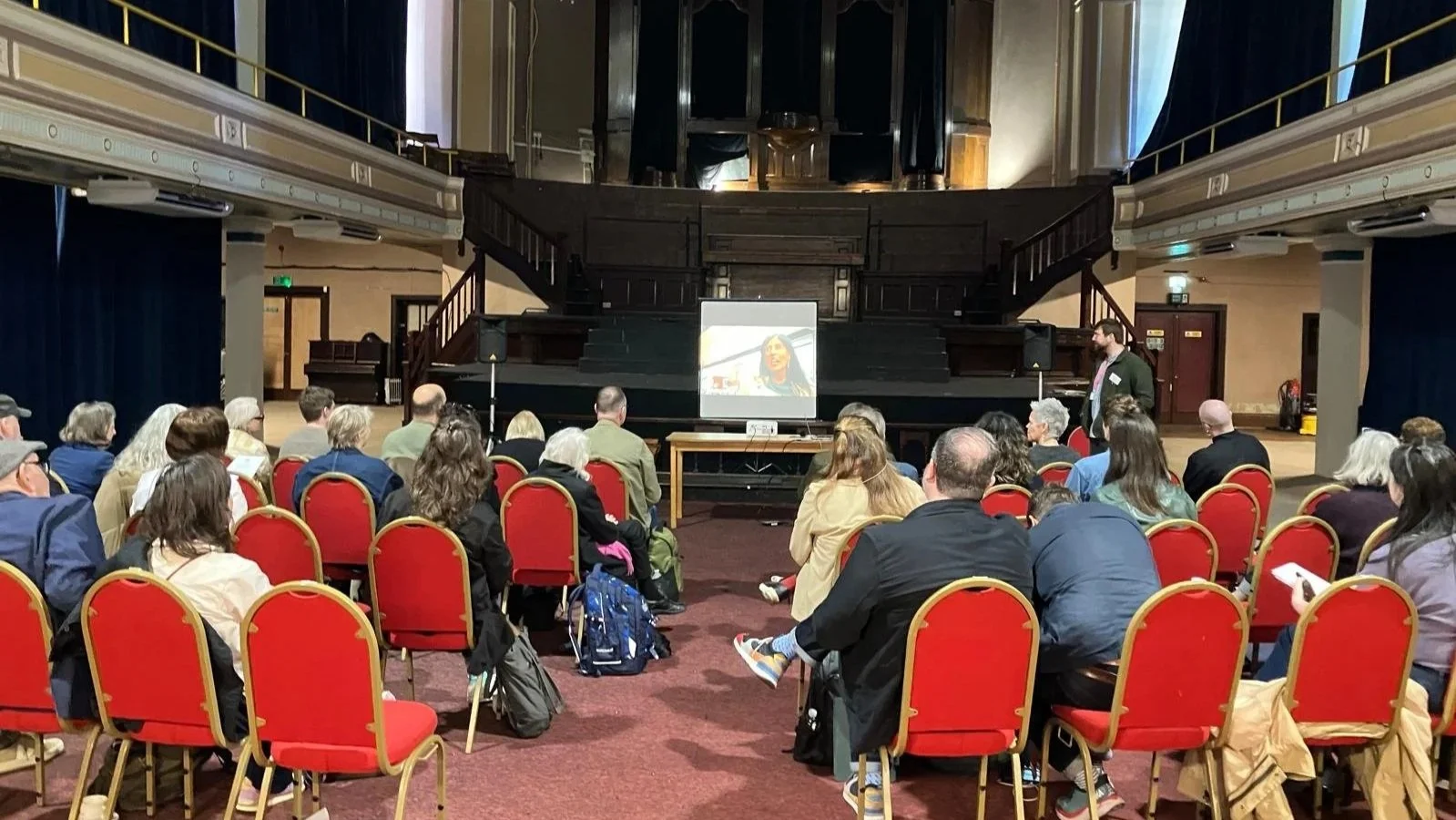
Our 2026 conference continued and developed the theme of co-operation and mutuality in support of fine and visual arts education. We had a focus on the relevance of place and, in response to the UK government white paper on post-16 education, those initiatives that offer opportunity and mitigate barriers to advanced and higher learning in areas of creative and cultural practice and skills acquisition. The aims of the conference were to:
Better understand and promote the dimensions for success in growing locally relevant post-statutory educational resources for creative and cultural lifelong learning.
Enhance awareness of the evolving partnerships and co-operative practices that bridge formal, non-formal and informal learning in visual arts and culture practices.
Consider models and opportunities for fine art learning and the promotion of creative and cultural skills that mitigates border and geo-political territories.
The Rochdale context.
Champness Hall in Rochdale provided the venue for our 2026 conference. The town has many reputations but its true legacy is embedded in self-organisation, co-operation and worker and community resilience. Rochdale’s social innovations, past and present, owe a significant debt of gratitude to the Society of Equitable Pioneers, established in 1844 and responsible for the Rochdale Principles that set the foundations of the modern co-operative movement, globally.
Contemporarily, Rochdale Borough Council is a member of the Co-operative Councils’ Innovation Network. Rochdale’s ‘Cultural Compact’ uses sociocracy methodologies to distribute authority and encourage self-determination within the local arts and cultural sector. The Rochdale context was introduced by Ebor Studios, Create Rochdale, and Rochdale Culture Co-op, all organisations helping to embed the Cultural Compact and the Local Cultural Education Partnership.
Conference Presentations
Conference presentations covered a range of topics responding to the conference themes, including: Artist value and trans-local practices; Permission, place and belonging; Technology, power and societal engagement; Building alternative ecosystems, Language, care and education.
Take a look at overviews of the presentations below.
Natasha Kidd (with Abigail Hunt)
The Value of Artists: Artist-Led Resources as Sites of Learning
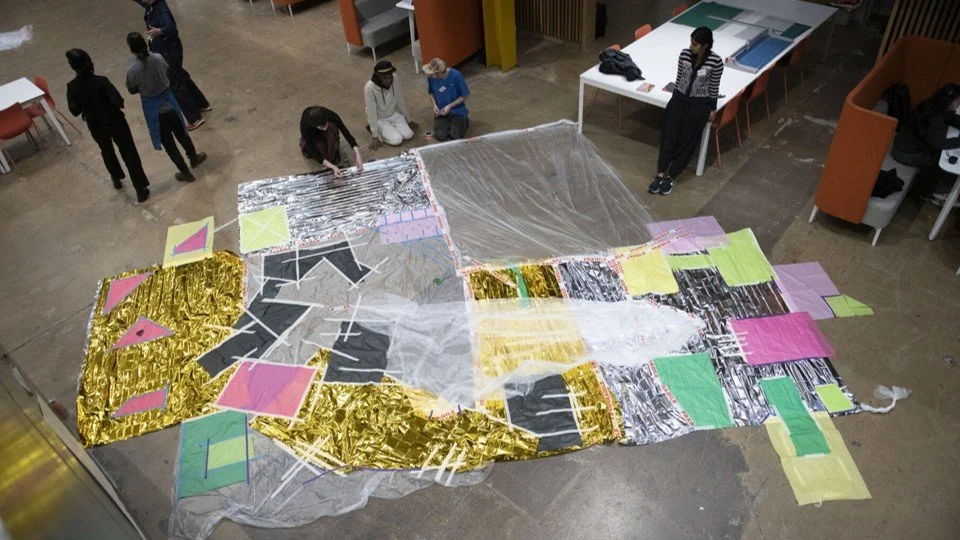
The Value of Artists project asked: what if artists themselves created the resources that show young people how creative practitioners actually think, work, and navigate uncertainty? Delivered at Bath Spa University's Locksbrook Campus through Culture West (funded by West of England Combined Authority and Arts Council England), the Value of Artists Project trained 25 regional creative practitioners to develop artist-led learning resources. Five were commissioned and are now distributed for free across schools, alternative provisions, and youth settings in Southwest England. These resources don't just describe creative careers - they embody creative practice itself.
In the conference session Dr Natasha Kidd presented the project while envisaging the entire conference day as a collective resource-making process. Natasha and Abigail set provocations that conference attendees engaged with throughout the day, gathering material that will then be assembled into a low-fi learning resource documenting the conference. This addresses conference themes around co-operative learning, participatory practices, place-based cultural infrastructures, and lifelong learning. It models distributed authorship and collective knowledge-making while creating a tangible resource that travels beyond Rochdale.
Dr Natasha Kidd is a Reader of Art Practice and Pedagogy at Bath Spa University, where she is an Associate Vice Provost leading on a Creative Engagement Strategy for the Art and Design campus. Best known for her automated painting systems, Kidd’s practice research explores strategies for exposing the distinct ways in which an artist learns and the broader societal value of inhabiting this type of learning.
Abigail Hunt is the Lead Artist on the Value of Artists Project. Her research-based art practice incorporates collage, sculpture, installation, social engagement and event-based performance, deeply informing her practice as a freelance educator and project manager. She is currently one of the collaborators of the ‘All The Things’ exhibition at Orleans House Gallery which is an intergenerational project exploring imagination across all ages. She is an Associate Lecturer on the Creative Arts Practice and Fine Art courses at Bath Spa University and is the Programme Manager for the Camden Schools Art Biennale for Central St Martins, UAL.
Simon Morrissey
Fifth Column (or how artist students can run the world)
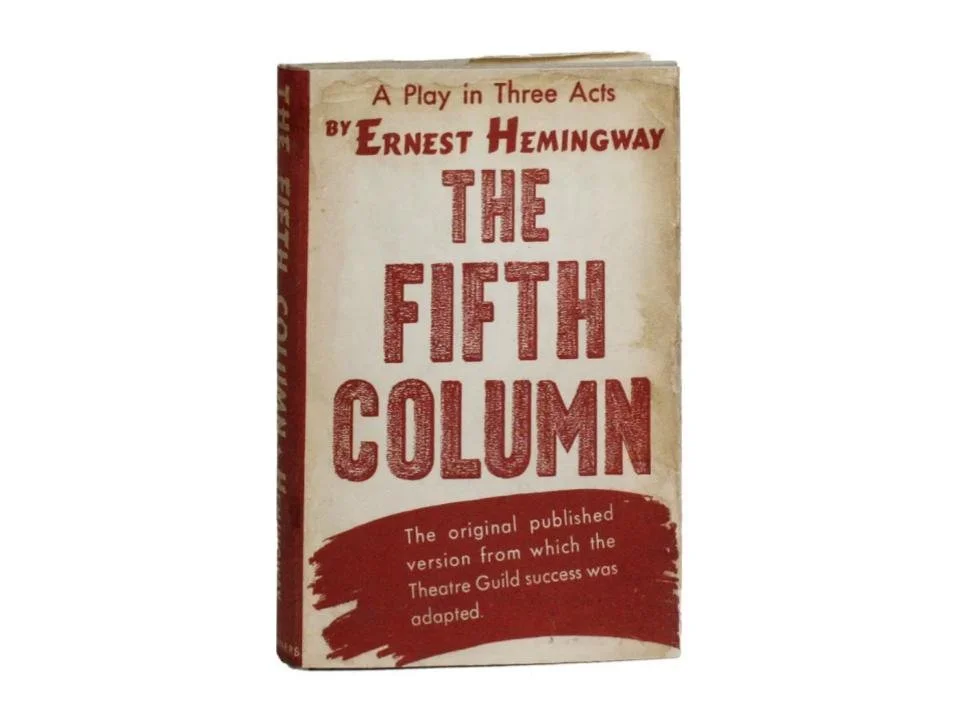
In his presentation The Fifth Column (or how artist students can run the world), Simon Morrissey challenged the notion of a “crisis” in Fine Art education, arguing it stems from how the sector defines its own value. He suggested that institutions focus too narrowly on producing artists, overlooking the diverse careers graduates pursue, from education and entrepreneurship to roles across industry.
Morrissey proposed that current narratives are outdated and fail to reflect students’ ambitions or the transferable skills developed through arts education. These broader outcomes are rarely researched or promoted, reinforcing a sense of undervaluation. He called for a shift in perspective, urging educators to better recognise and support flexible career paths, including those combining artistic and non-artistic work. Morrissey concluded that the true power of visual arts education lies in its ability to equip graduates with adaptable skills that extend far beyond the art world.
Simon Morrissey is a curator, and the Director of Foreground. His practice responds to people and place as the generators for curatorial and social projects. He is also the founder of the Document and Location research programme, which investigates place and its interpretation. Simon is Associate Professor of Fine Art, University of the West of England, Bristol. As an academic he has a particular interest in knowledge exchange, experiential learning, professional practice pedagogy and graduate support structures in the HE arts education.
Susan Jones
Locative Art Practices: A Sense of Belonging
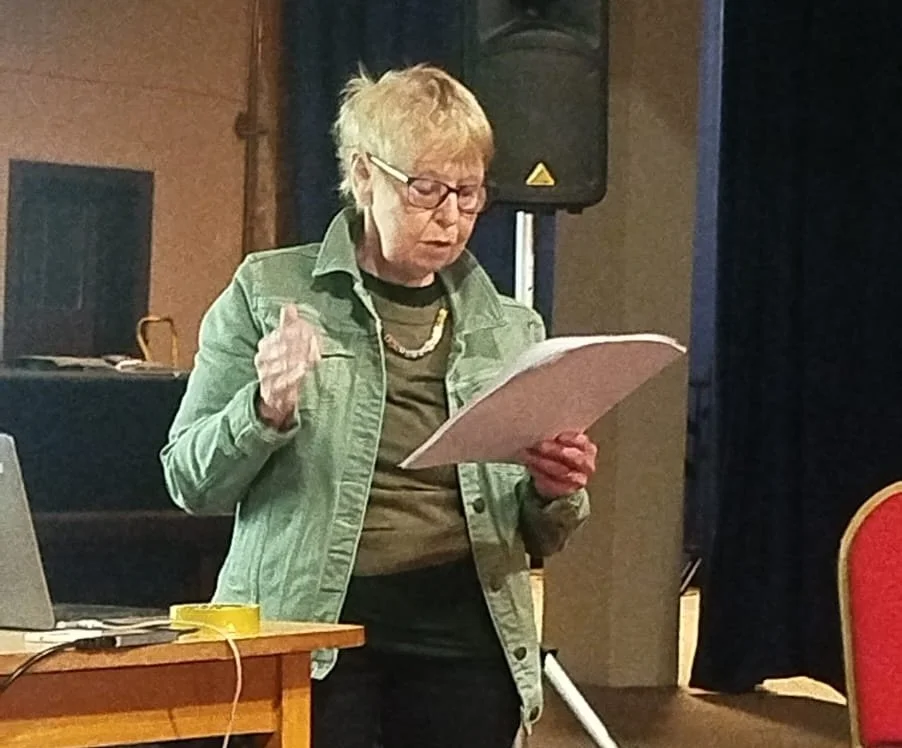
A dedicated study of artists’ lives shows most sustain practice through ‘situated practices’, making long-term contributions to places and communities (Markusen 2013). These practices are adaptive, shaped by personal circumstances, and supported by the development of social capital, enabling resilience and sustained livelihoods. As ‘resident human beings’ (Francis 2018), artists create specific ways to maintain and expand their work over time.
However, the contemporary visual arts ecology—dominated by risk-averse, neoliberal institutions—treats artists as a ‘labile’ resource (Morgan & Nelligan 2015). Opportunities are often structured around short-term, measurable outcomes rather than supporting artistic development. This shift undermines artists’ social status and restricts the long-term impact of their sustained practices.
Susan Jones is an independent researcher, who works across academia and the arts industry. Artists’ lives: ecologies for resilience (2024-25) is her final study of three since 2019 that have focused on artists’ livelihoods and arts policy interrelations. Her writing has been published in journals including Art Monthly, Arts Professional, Arts Review and Cultural Trends and she has contributed to conferences, HE courses, research enquiries and policy discourse.
Marsha Bradfield & Archana Prasad
GEN AI? Not Your Guru!
This presentation responded to growing concerns among artists, designers, and cultural producers who feel isolated in increasingly screen-based, AI-driven environments. It addressed urgent questions around AI literacy, including how communities can engage with human–machine collaboration in ways that are inclusive, intercultural, interdisciplinary, and intergenerational. Drawing on TechArt platforms rooted in Bangalore—BeFantastic, Jaaga, and Gooey—the paper explores how trans-local creative communities foster collaboration, lifelong learning, and solidarity beyond geopolitical boundaries. Their archives provide insight into alternative models of practice that challenge dominant, elite-driven narratives of technology.
The presentation introduced posthumanism as a framework for rethinking relationships between humans, technology, and power, while also considering the importance of place in digital creative work. Referencing community-led projects, it highlighted approaches that support wellbeing and counter disembodiment in online life.
An iteration of “GenAI? Not Your Guru!”, Marsha’s open-ended lecture that combines the ethos of the historical avant-garde with a tech-curious approach to offer a fresh take on the evergreen questions: What is the artist’s role in society? What pedagogies will nurture their purposeful/purposeless work in the world?
Marsha Bradfield is an award-winning educator at the University of the Arts London (UAL). Her expertise in the expanded practice of art has developed through collaboration and research with diverse people and formations. These include the Artificial Intelligence Research Group, BeFantastic/Jaaga/Dara, Critical Practice, Future Reflections, Incidental Unit, Pangaea Sculptors' Centre, Precarious Workers Brigade and Shared Campus. Marsha is the Course Leader of MA Intercultural Practices at Central Saint Martins and is involved with REBEL (Recognising Experience-Based Education and Learning). She also teaches on BA Fine Arts at Camberwell College of Arts and supervises PhD students across UAL.
Archana Prasad is a creative technologist, researcher, and entrepreneur working at the intersection of AI, culture, and society. She is Founder and Chief Creative Officer of Gooey.AI, a low-code platform used by over a million builders to deploy generative AI workflows for global impact. Her work brings together artistic practice, technological experimentation, and participatory research to explore how emerging AI systems can better reflect cultural diversity and collective knowledge. Archana is currently a PhD researcher at the Royal College of Art, where her research investigates inclusive AI pipelines grounded in cultural heritage, including textile traditions and literary archives.
Helen Smith & Mary Loveday
Activating Agency Through Activism: Printmaking and Design Theory
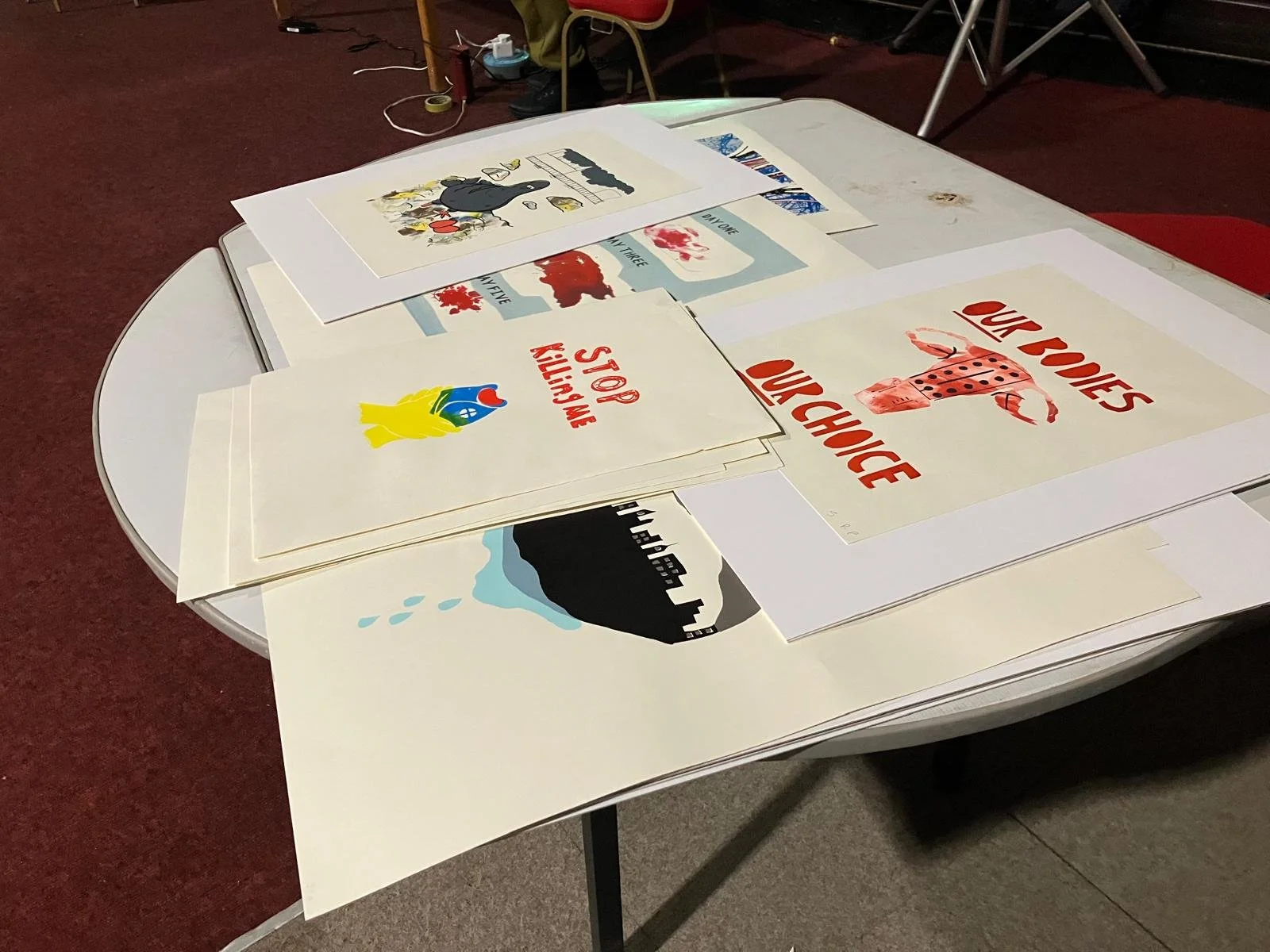
A revalidation process at the University of Sunderland enabled closer integration of theory and practice by embedding lectures within modules, including a Year 2 undergraduate Printmaking course for Illustration and Design students. Helen Smith and Mary Loveday developed collaboratively, a module centred on ethical design and art as social practice, focusing on amplifying underrepresented voices. This informed a series of theory lectures and three iterative assignments exploring representation and diversity, sustainability and regeneration, and propaganda and alternative structures for living. Students engaged with practitioners such as Corita Kent and the See Red Women's Workshop.
Assessment methods were expanded beyond traditional essays to include zines, online exhibitions, and portfolios, encouraging critical engagement and personal connection to the themes. Collaborative working was also supported to challenge competitive norms in higher education. Early results show increased student engagement, alongside stronger critical writing and more ambitious, conceptually developed print work across the cohort.
Mary Loveday is a researcher, lecturer, writer and editor, and creative practitioner in Arts & Ecology. I am Senior Lecturer in Design Theory at Sunderland University, and pursue research in design, ecology, performance, and nostalgia. BA(Hons) in Theatre with Performance Writing and MA in Arts and Ecology, both from Dartington College of Arts. PhD (University of Leeds) on the use of nostalgia at the ideation stage of design.
Dr. Helen Smith is a Visual artist with a studio in North Shields and Lecturer in Printmaking at University of Sunderland, UK. She is interested in how the social qualities of art can influence change. She creates the conditions, through collaborative artmaking for diverse voices within communities to be heard. This is a negotiated and open approach occurring in many social contexts. Currently Helen is focusing on the social qualities of printmaking as ‘print-activism’. How does print evoke action?
Jackie Goodman
Rethinking Routes to Art Practice
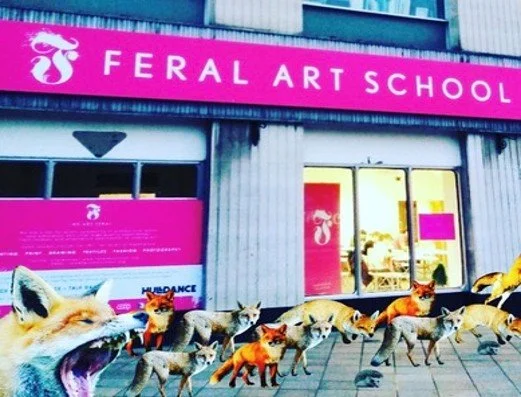
Is it possible to redraw the map leading to art practice? One of the strengths of NAFAE conferences is the openness of members to discussion about alternatives to accepted routes to art practice and acknowledgement of the barriers that prevent access to the conventional routes via university degrees. These include personal, financial, social and educational circumstances that the university system is not designed to accommodate. Experiments in alternative routes to art practice are discussed in Cooperative Education, Politics and Art (2024) co-edited by Jackie Goodman with fellow NAFAE member Richard Hudson-Miles. Jackie Goodman together with colleagues at The Feral Art School, Hull, have been developing their own experiments in creating alternative routes to increase access and explore the question of accreditation and assessing value, elements which in themselves provide challenges and limitations.
In her presentation Jackie Goodman gave an overview of Rewilding Practice, a Feral Art School one-year postgrad-level programme which ran from March 2024-July 2025 and described what they learnt about some of the above issues. She also presented a case study of a student who has successfully navigated her way to a place on a MA course via a map drawn through Feral Art School courses and programmes.
Jackie Goodman is a Director and founder member of The Feral Arts School in Hull. She has taught art and design, performance and media studies in secondary schools and sixth form colleges and lectured in critical & theoretical studies at Hull School of Art and Design, where she was Associate Dean until 2018. Her research areas are literature and domestic space, and the development of alternative models of art education. She is an Honorary Research Associate at The University of Hull and a member of the Cooperative University Federation Working Group, a community of education co-operatives working to develop alternative models of education and to nurture co-operative learning.
Alex Martin-Cary
Advisory Meetings: Advising as an Equity Practice
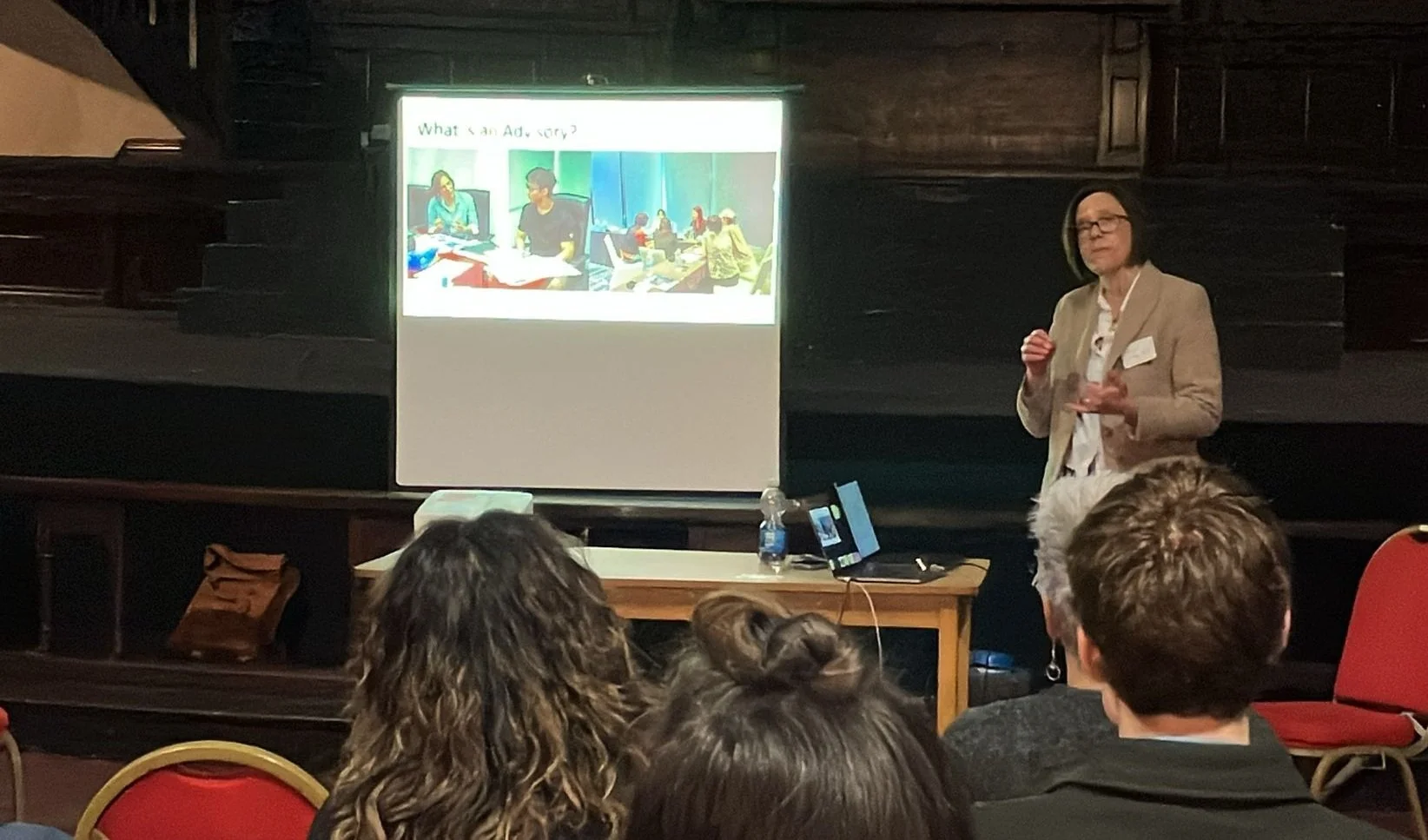
This paper drew on the experience of academics and students from Central Saint Martins of conducting and attending advisories at all study levels, in person and online, in the UK and across the globe. It will draw out the key features of the best advisories - when the transformational creative energy of relationship, openness and excellent teaching come together to generate tangible benefits, and how these features align with wider research around access and equity. Finally, it offered a provocation in the form of a dream – a vision for the ways in which creative educators and our institutions might embed a culture of ‘advising for equity’ into our student recruitment and admissions processes.
Alex Martin-Carey is a writer and performance maker with a particular interest in the spaces where storytelling, activism and community intersect. She is also the College Admissions Tutor for Art, Performance and Curation at Central Saint Martins. Alex has completed a PhD in Contemporary Fiction and a PG Dip in Theatre Directing, and has two decades of experience teaching at universities, schools and in the community.
Jonathan Kearney
Developing a Language Within Education that Supports ‘Educare’
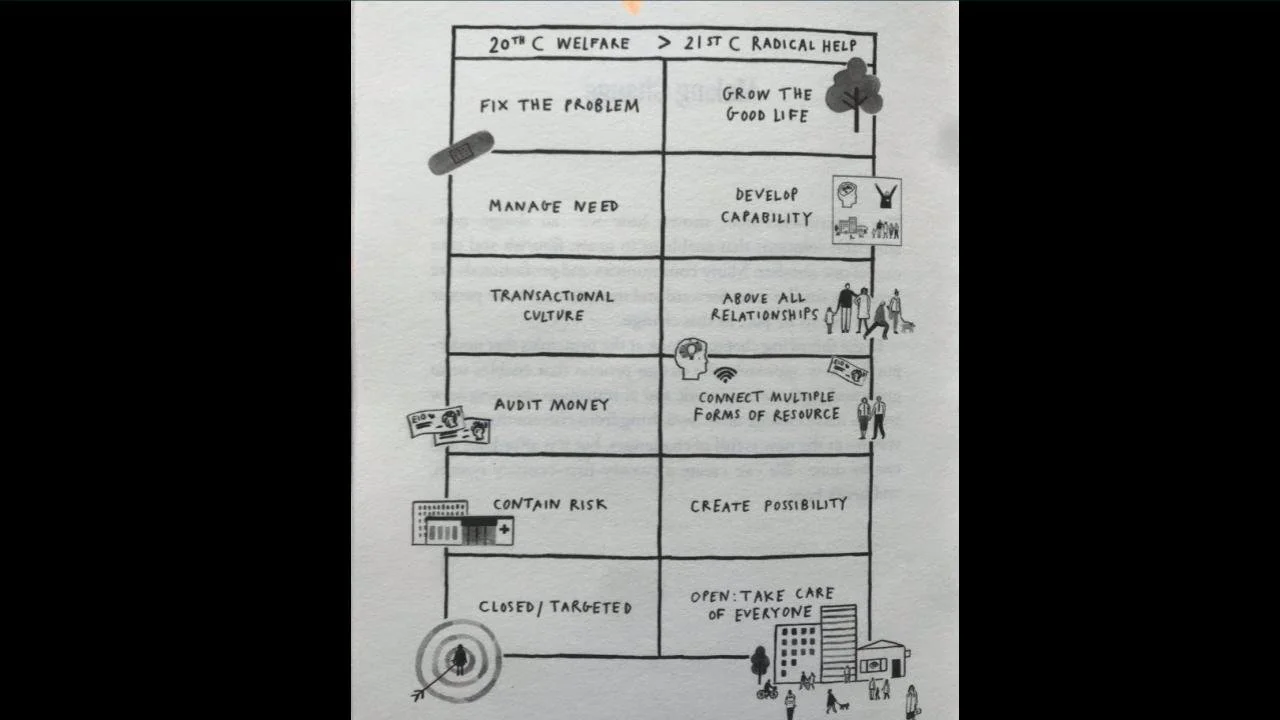
educare/educere — kindness, becoming and heutagogy/ubuntugogy as a radical imagining of art education
Jonathan Kearney’s provocation invited us to explore the etymology of the language we use in education and to consider what happens when we bring in ideas from wider fields such as Radical Help (Cottam, 2018), Doughnut Economics (Raworth, 2017), Empathy (Krznaric, 2015), and Teaching to Transgress (hooks, 1994). How might these perspectives challenge or expand how we think about art education today? Drawing on a current practice-based PhD exploring the intersection of art and teaching and informed by 22 years of leading a Master’s in Fine Art — which most unusually is taught online — this session will sought to open space for shared reflection, dialogue, and reimagining.
Jonathan Kearney is an artist, Senior Lecturer, Teaching Scholar and Fine Art Masters Course Leader at Central Saint Martins, University of the Arts London. Since 2004 Jonathan has pioneered online education for Fine Art Masters students leading a course where students are able to fully engage from anywhere in the world.
Dr Tōmei June Bacon & Dr Sammy Holden
Making the Virtual Trans-Local
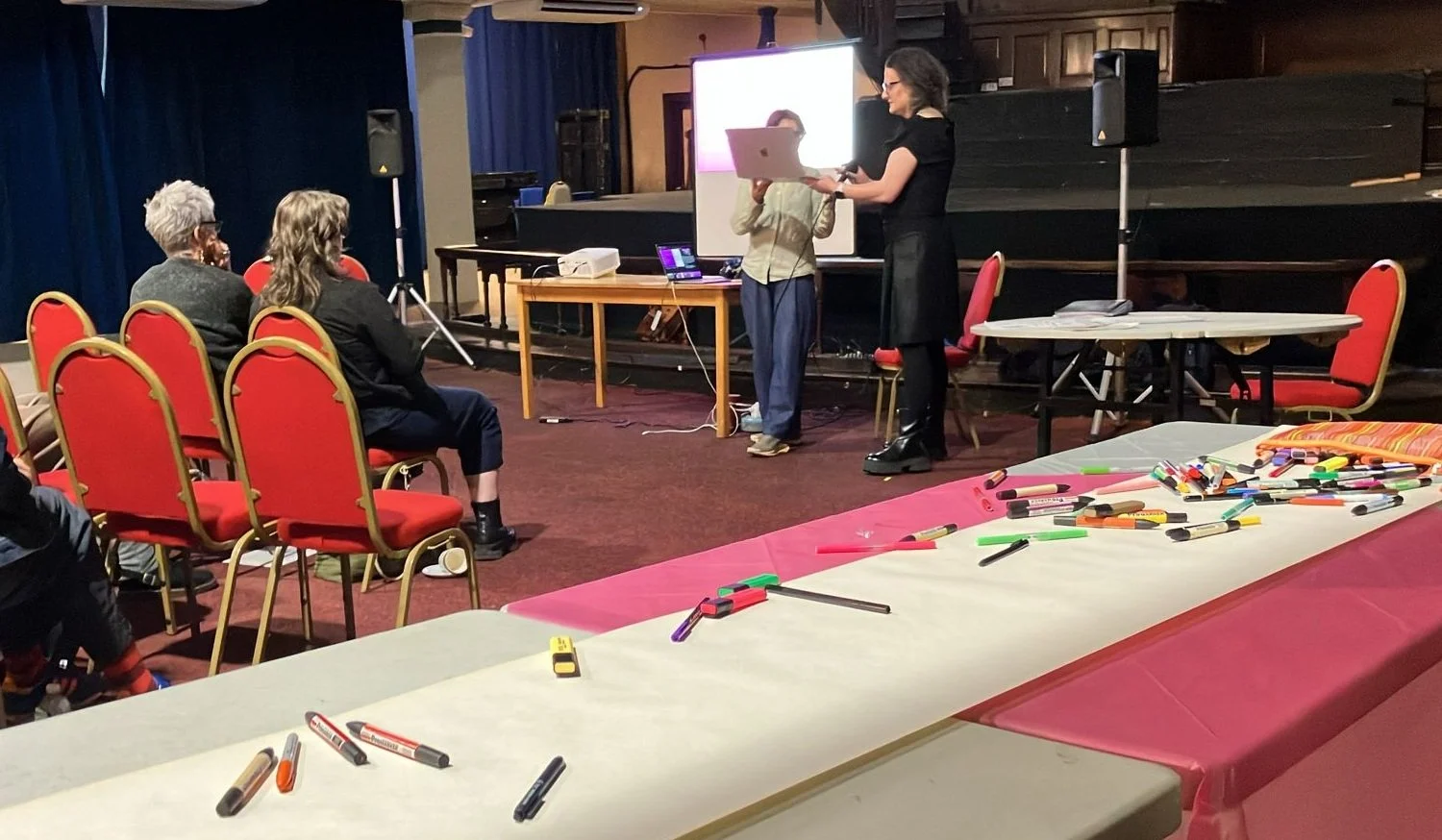
This presentation introduced the Trans+ Virtual Centre of Excellence (TVCE), an interdisciplinary and transdisciplinary global research collective. Uniting a Higher Education network of scholars and research students, TVCE members produce world-leading research that centres and celebrates Trans+ lives, fostering critical, intersectional, and transformative approaches to knowledge through care, reflexivity, and methodological innovation. Founded in 2024, the TVCE responds to intensifying conditions of political hostility, institutional precarity, and systemic misalignment affecting Trans+ communities within and beyond the academy. Co-leads Tōmei June Bacon (she/her) and Sammy Holden (they/them) position the centres' own virtualness and the hybridity of its symposia not as secondary or compensatory, but as a necessary site of relational, ethical, and political practice.
Structured through a fragmented methodology of writing and drawing, the session invited delegates at the conference to reflect on their own institutional and pedagogical contexts. Drawing on Sara Ahmed’s (2006) concept of disorientation and later work on use (2019), alongside Bacon’s (2025) work on the transmutability of borders, the presentation interrogates how academic systems can often orient toward normative trajectories while marginalising those who do not conform. Together we will consider how opening space for alternative practices could reimagine ways for institutional futures to be productive, generative and inclusive for all.
The paper demonstrates that the TVCE functions as a trans-local “safe harbour,” grounded in safety, access, and relationality. Drawing on the 2025 symposium Queer Acts of Hope, it explores how alternative modes of gathering can cultivate agency, peer exchange, and collective meaning-making beyond extractive academic structures. Engaging Bacon’s assertion that the denial of value can render marginalised experience “void,” the presentation foregrounds the urgency of creating infrastructures in which Trans+ scholarship can exist and transform, propose a reorientation toward ethical partnership, minimal extraction, and sustainability as care.
Dr Tōmei June Bacon publishes as T. J. Bacon. She is a leading voice in the study of performance and visual art through queer phenomenological approaches. From 2009 to 2017, her work established the phenomenology of a multiplicity of self/s, mapping the perception of multiplicity, embodiment, and temporality across experimental, interdisciplinary practices. This foundation was later developed through the application of queer phenomenology and continues to evolve through her groundbreaking developments towards a trans phenomenology.
Dr Sammy Holden is a University Practitioner in Film at the University of Huddersfield and a graduate of Edge Hill University. Their practice as research PhD involved the creation of six short films in analogue and digital formats. They are a filmmaker, film programmer, artist and educator, as well as an Impact Producer with Reclaim The Frame for the North West.